What They Develop
- Number sense
- Counting and calculation skills
- Pattern recognition
- Logic and reasoning
- Problem-solving skills
- Confidence with math concepts
Explore kids toys, games, and activities with more clarity.
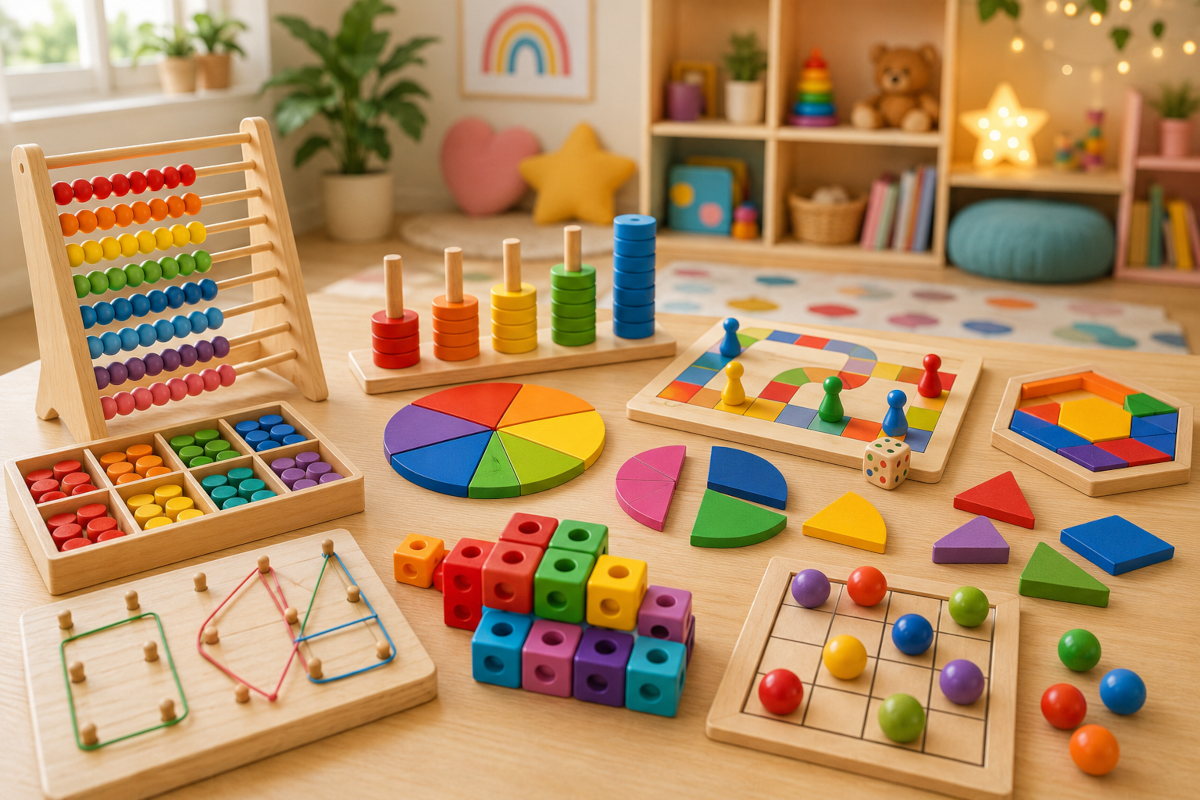
Math learning and logic games help kids practice numbers, patterns, counting, operations, shapes, measurement, and reasoning in a more hands-on way. They can make abstract math ideas easier to understand by turning them into games, manipulatives, puzzles, and visual activities.
This group includes math board games, fraction kits, multiplication games, abacus sets, and geometry tools. They work well for children who benefit from seeing, touching, sorting, comparing, and testing math ideas instead of only working on paper.
Always follow the age rating and instructions on the product. Adult supervision is important when activities include small counters, dice, cards, beads, magnets, sharp geometry tools, or pieces that younger children may put in their mouths.
Typically 4+ years for simple counting and matching games, and 6+ years for multiplication, fractions, geometry, and more structured logic games, depending on complexity and manufacturer safety guidance.
Guided math practice, family board games, classroom activities, homeschool lessons, logic challenges, hands-on manipulatives, independent practice, and parent-led number games.