What They Develop
- Teamwork and cooperation
- Communication skills
- Shared problem-solving
- Planning and turn-taking
- Flexible thinking
- Confidence without direct competition
Explore kids toys, games, and activities with more clarity.
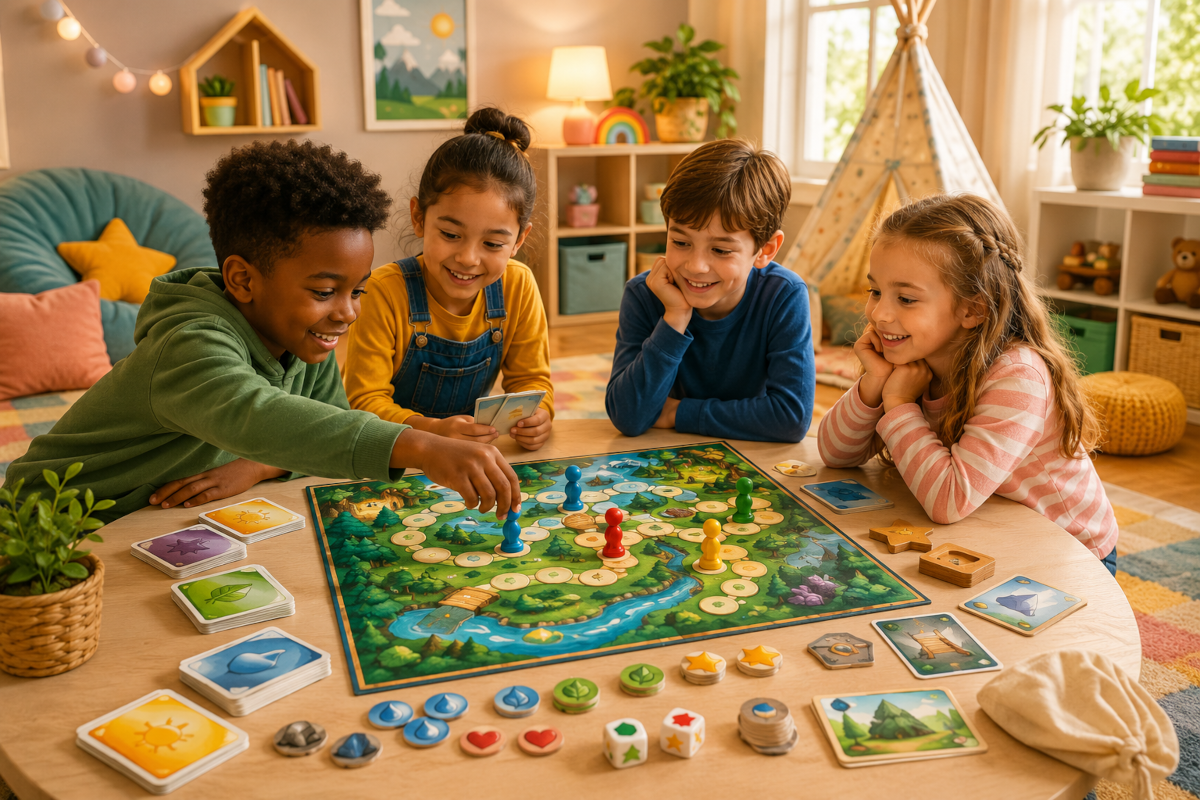
Cooperative board games ask players to work together instead of only competing against each other. Children and adults share information, plan turns, solve problems, and try to beat the game as a team.
This group includes team-based adventure games, collaborative mission games, and story-driven co-op games. They work well for family game nights, classrooms, sibling play, mixed-age groups, and children who enjoy shared challenges more than direct competition.
Always follow the age rating on the board game. Many cooperative games include small cards, tokens, dice, tiles, pawns, or markers that can be a choking hazard for younger children. Also check the story theme, because some adventure or mystery games may be too intense for sensitive kids.
Typically 4+ years for simple cooperative games and 8+ years for deeper mission, adventure, or story-driven co-op games, depending on reading level, play time, theme, and manufacturer guidance.
Team-based missions, shared adventure play, group problem-solving, story-driven challenges, family game nights, classroom cooperation practice, and screen-free collaborative play.