What They Develop
- Subject knowledge
- Vocabulary and reading practice
- Number and logic skills
- Memory and recall
- Turn-taking and listening
- Confidence with learning topics
Explore kids toys, games, and activities with more clarity.
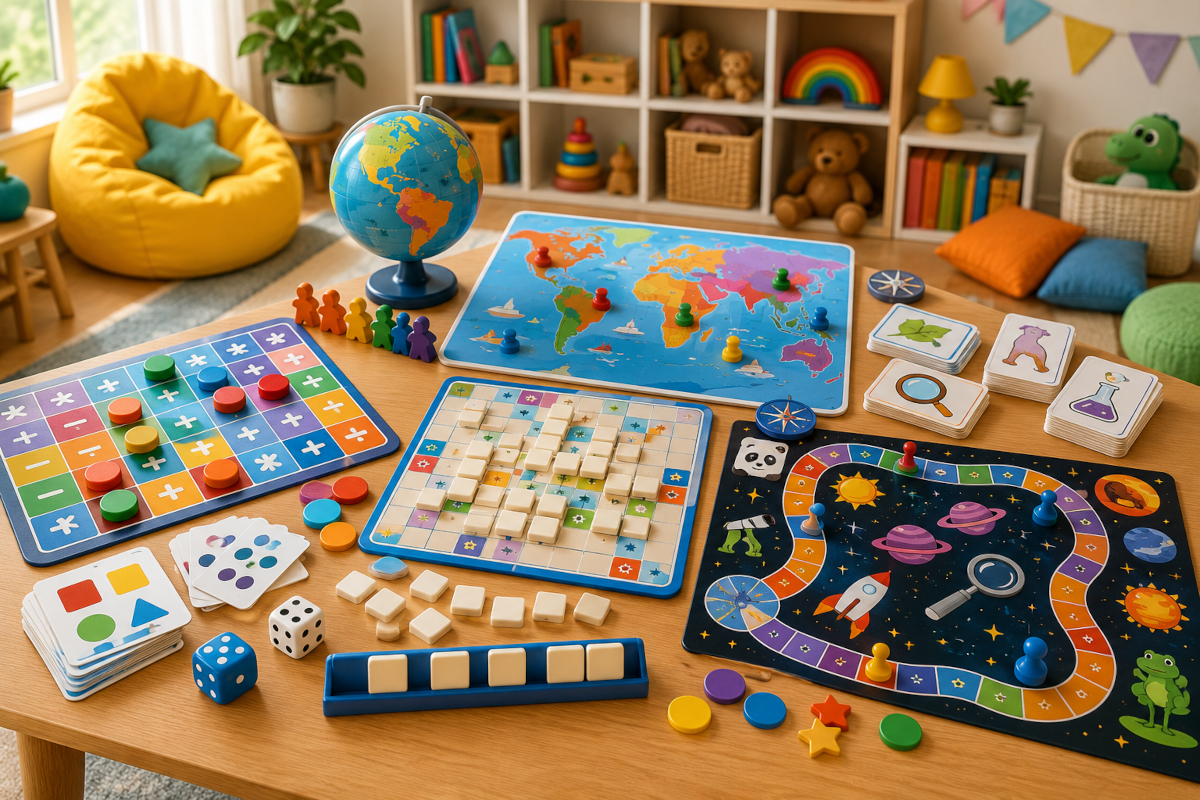
Educational board games combine tabletop play with school-style skills such as numbers, spelling, geography, science, memory, and general knowledge. They can make practice feel more playful because children learn through turns, questions, cards, movement, and shared challenges.
This group includes math board games, spelling games, geography quiz games, and science trivia games. They work well for families, classrooms, homeschool lessons, rainy days, and children who enjoy learning through games rather than only worksheets.
Always follow the age rating on the board game. Educational games may include small cards, dice, pawns, tiles, letter pieces, counters, or quiz tokens that can be a choking hazard for younger children. Choose games that match the child’s reading level and attention span.
Typically 4+ years for simple matching, counting, and letter games, and 7+ years for quiz, trivia, spelling, geography, science, or more advanced math games, depending on reading level and rules complexity.
Classroom learning games, homeschool practice, family quiz games, spelling challenges, math practice, geography questions, science trivia, and screen-free educational play.