What They Develop
- Language and vocabulary
- Listening comprehension
- Imagination and storytelling
- Emotional understanding
- Visual literacy
- Shared reading routines
Explore kids toys, games, and activities with more clarity.
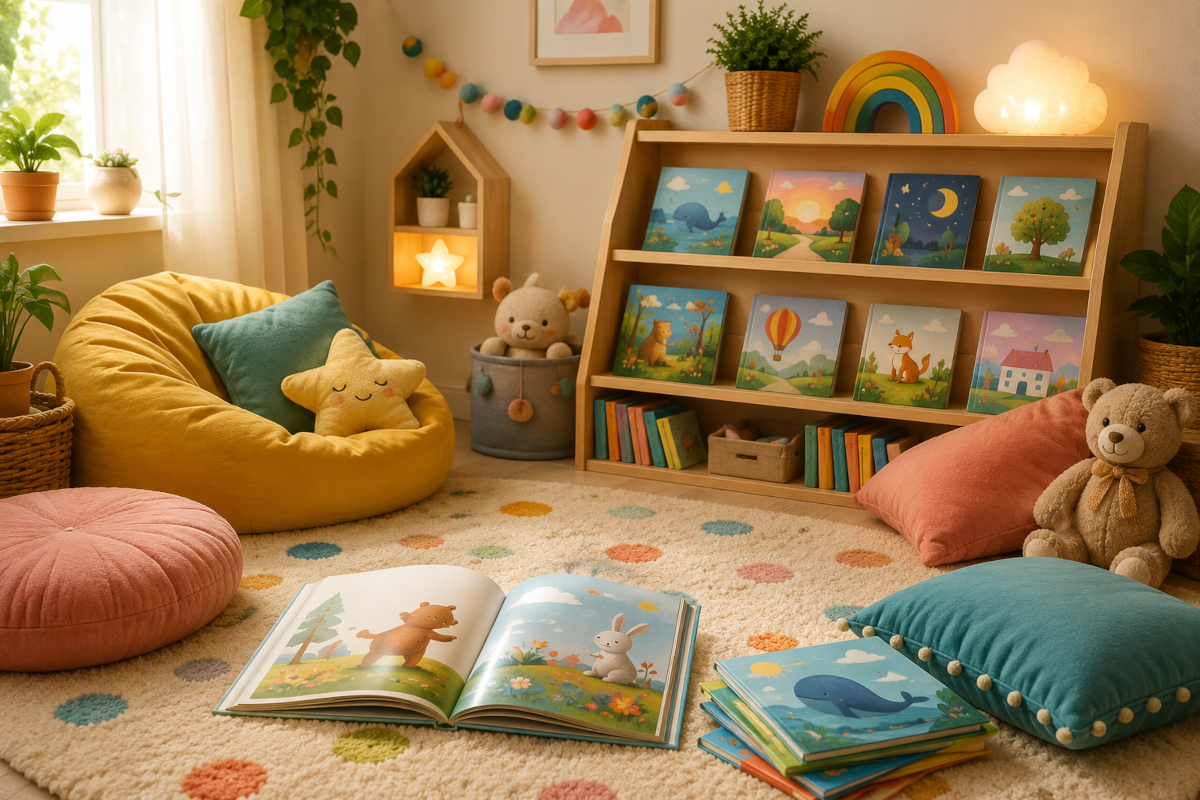
Picture books use illustrations and simple storytelling to help children follow characters, emotions, events, and ideas before they can read independently. They are often read aloud by adults and can become part of bedtime routines, classroom reading, seasonal traditions, and everyday family moments.
This group includes illustrated storybooks, bedtime stories, seasonal picture books, and moral stories. They work well for preschoolers, early elementary children, parents, teachers, and caregivers who want books that support language, imagination, empathy, and shared reading.
Choose picture books that match the child’s age, attention span, and emotional readiness. Some stories include fears, loss, conflict, scary scenes, or complex topics, so preview books when choosing for sensitive children or group settings.
Typically 2+ years for simple picture books and 4+ years for longer stories, seasonal books, and moral stories, depending on text length, theme, illustrations, and the child’s attention span.
Read-aloud sessions, bedtime stories, classroom circle time, seasonal reading, parent-child lap reading, discussion-based reading, and repeated storytime with favorite characters.